
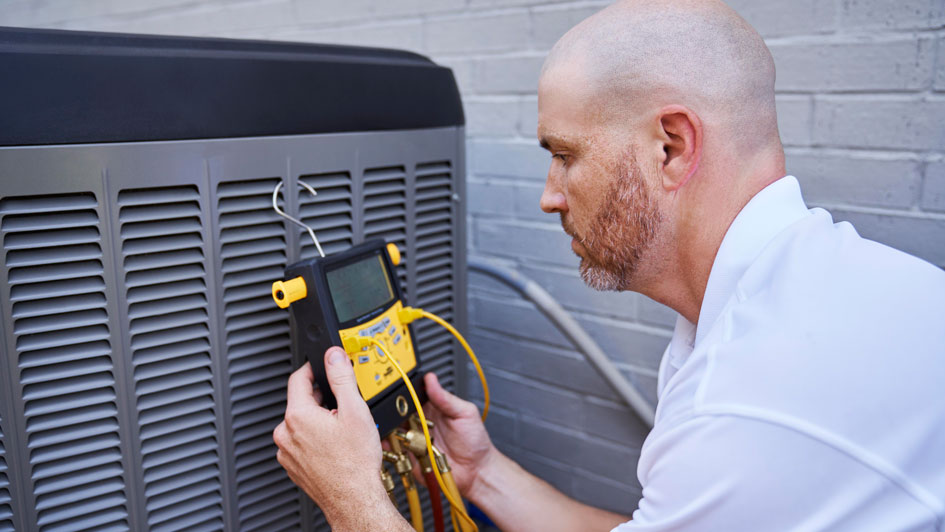
If you want a fulfilling, successful career, look no further than heating, ventilation and air conditioning. HVAC is one of the fastest-growing careers you can find, according to the U.S. Bureau of Labor Statistics, which predicts additional industry growth of 13 percent by 2028.
It's easy to see why these careers are growing so quickly. One is homeowners taking advantage of government incentives to upgrade to more energy-efficient comfort systems. It's also important to consider R-22 Freon® coolant, which affects old models. Finally, there’s the red-hot real estate market and a property shortage that’s driven an increase in new construction homes.
You can join this rewarding industry by becoming an HVAC technician. Find out about what they do, how to become one and about how much you can expect to make.
What Is an HVAC Technician?
A HVAC technician possesses the knowledge and skills to service heating and cooling systems. Most technicians will earn experience on equipment in both homes and commercial properties. And, most important, you’ll learn a great deal about:
- Air conditioners
- Furnaces
- Mini-splits and heat pumps
- Thermostats and home zoning
- Indoor air quality equipment like air filters and air purification systems
Some apprentices even become HVAC-R technicians, which means they also work with refrigeration.
Is There a Shortage of HVAC Technicians?
Experienced HVAC technicians are increasingly sought after because of an industry shortage of labor. This discrepancy is the result of several factors, like a higher rate of retirement and competition from other industries. Many younger people also pursue college degrees as opposed to a licensed trade like HVAC.
Is HVAC a Hard Career?
While HVAC can be physically demanding, it can still be quite gratifying. As a technician should be able to:
- Work in unpleasant settings, such as tight or dusty spaces.
- Work in high or low temperatures since HVAC equipment is generally found outdoors.
- Work evenings, weekends and overtime during peak demand.
A common misconception about learning HVAC is that it’s a blue-collar career. In truth, you'll need distinct skills, specialized education and continuous recertification.
It’s a smart career if you would like to:
- Minimize student debt.
- Stay active rather than remain inside an office.
- Have job security because the HVAC industry can't be outsourced.
- Gain the experience you need to start your own successful business.
Is HVAC a Stressful Job?
Any job can be stressful. HVAC technicians handle complex equipment and will occasionally have to endure cramped or uncomfortable working conditions. Sufficient experience and tools can help mitigate some of these concerns. What’s more, paid training and a consistent schedule help HVAC professionals avoid some of the most common sources of work-related stress.
Is HVAC Hard on Your Body?
Carrying heavy equipment and performing repetitive motions are two common reasons HVAC can be physically demanding. Reaching difficult-to-access equipment can be strenuous. HVAC projects are often physical, and you may benefit from a healthy diet and exercise regimen to remain as healthy as possible.
Is HVAC a Recession-Proof Job?
While there isn't a job that's immune to a recession, HVAC is particularly resilient due to the essential nature of heating and cooling equipment. Repairs and installation will always be required, meaning HVAC professionals can often find work in more places than other industries.
Is HVAC a Good Career for the Future?
As HVAC systems continue to advance, professional servicing will become even more important. The newest models of heating and cooling systems use less energy or generate it from renewable sources such as solar and wind. Sustainable HVAC equipment will continue to expand, as will the need for certified HVAC technicians.
How to Become an HVAC Technician
To start a career as an HVAC technician, you’ll need a high school diploma or GED as well as professional training. Other, more specialized (and higher paying) HVAC careers are dependent on additional education or certifications.
Earn certifications by taking classes at a community college or trade school. How long it takes to become an HVAC technician varies from program to program, which generally lasts between six months to two years. An employer may also require NATE certification. Standing for North American Technician Excellence, this industry-leading accreditation expands your technical knowledge to ensure the highest quality services.
While some aspects of the job can be learned on your own, a proper education means a combination of classroom programs with on-site training. At the same time, HVAC careers don't involve complex math. While a little math is needed, most of the HVAC professionals’ skill set lies in critical thinking, for identifying problems and ensure quality installation.
Career Explorer reports that having experience with things like tablets, electronics and troubleshooting will be especially useful as equipment becomes more technologically advanced.
Another advantage of a career in HVAC is little to no student debt.
According to Midwest Technical Institute, signing up for classes at a technical or trade school typically costs around $15,000. A community college is usually around $5,000 per year. With a more conventional education, the average student debt for a bachelor’s degree is $25,921.
A Day in the Life of an HVAC Technician
Your work schedule may vary depending on where you work. If you primarily offer repair services, you may work early, late or be on call throughout the day. For projects more relevant to new construction, you are more likely to have a set schedule during normal business hours.
As a technician, you'll visit many different homes and businesses to perform repair, maintenance or installation work. Some jobs may need more time and resources than others, so the number of calls each day can fluctuate.
Like we mentioned earlier, you should expect the occasional job in severe weather as well as in dirty or cramped spaces. For jobs that work with customers or clients, strong customer service skills are always useful.
Is a Career in HVAC Profitable? Average Salary for HVAC Technicians and Other HVAC Careers
Since the HVAC industry is growing quickly, your salary will reflect it. The national average salary for an HVAC technician is $49,242, according to ZipRecruiter. Higher earners usually make around $56,600 and $68,000. However, total compensation can depend on where you live and its cost of living. Some HVAC techs working in management in a high-paying state may make as much as six figures.
In addition to owning your own business, there are other paths for career advancement. These include:
- HVAC manager, $72,515 average salary
- HVAC service manager, $71,176 average salary
Types of HVAC That Pay the Most
You can specialize for new opportunities within the HVAC industry, and continuing education and certification opportunities offer access to even higher salaries. For example, master engineers with project management or custom system design experience could be eligible for salaries as high as six figures. Larger salaries are also more common when working with advanced equipment like commercial HVAC systems, geothermal heat pumps or radiant in-floor heating.
What States Need HVAC Workers the Most
HVAC technicians are in demand across the country, but even more so in Florida, California, Texas, New York and Illinois. According to hvacclasses.org, these states need the most HVAC work and are experiencing enormous growth in the construction industry. Here’s why:
- Florida: Hurricanes, education and healthcare facilities.
- California: Wildfires, transportation, energy and utility projects.
- Texas: Hurricanes, energy, utility and other infrastructure upgrades.
- New York: Residential and infrastructure updates.
- Illinois: Companies relocating to the Chicago area.
Where HVAC Technicians Will Be in High Demand in the Future
Projections Central, who develops long-term occupational projections, expects these states to have the greatest demand for technicians by 2028:
- Utah, 31.1%
- Colorado, 29.7%
- Nevada, 27.9%
- Arizona, 21.4%
- Iowa, Oregon and Montana, 18.5%
- Arkansas, 16.3%
- Florida, 16.2%
- South Carolina, 16%
- Texas, 15.9%
- Idaho, 15.7%
- Washington, 15.6%
- North Carolina, 15.5%
- Tennessee, 15.2%
- Wyoming, 14.3%
- Nebraska, 13.9%
- Indiana, 13.8%
- North Dakota, 13.8%
Here’s where the highest number of new positions during that time frame are expected to be:
- Florida, 5,420
- Texas, 5,530
- California, 4,100
- North Carolina, 2,510
- New York, 2,290
- Colorado, 2,000
- Ohio, 1,550
- Pennsylvania, 1,510
- Virginia, 1,500
- Tennessee, 1,360
- Washington, 1,290
- Georgia, 1,270
- New Jersey, 1,170
- Utah, 1,170
- South Carolina, 1,1060
- Indiana, 940
- Maryland, 820
- Missouri and Arizona, 810
- Michigan, 780
Weather and a healthy economy should spur continued growth in these states, according to hvacclasses.org.
Grow Your HVAC Career with AZ Air Conditioning and Heating
HVAC technicians remain in demand across the country and in Los Angeles. To learn more about our openings, visit our careers page or call us at (877) 559-6081 today!